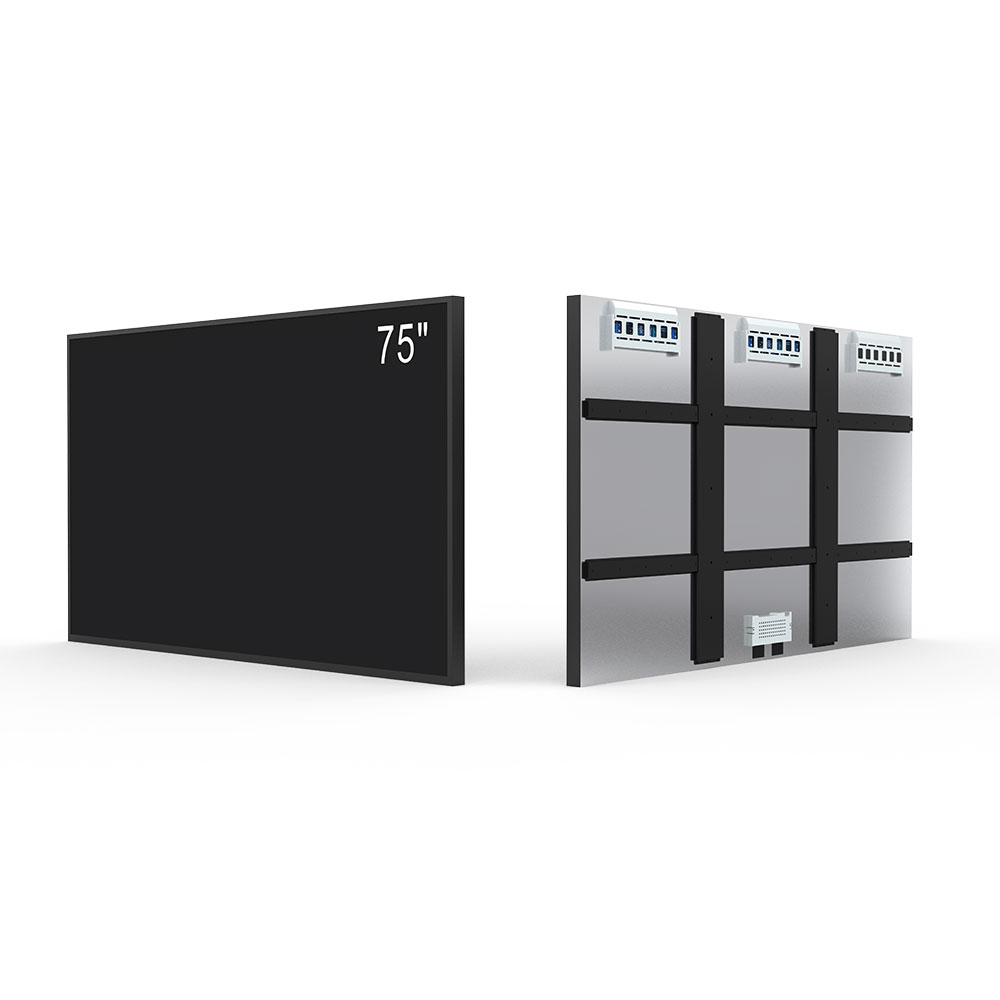
Designing a sunlight-readable, high-brightness LCD screen is not just about increasing lumens—it’s about integrating precision engineering, materials science, and real-world environmental testing. In outdoor applications such as military equipment, industrial control panels, or public transportation displays, visibility under direct sunlight (up to 100,000 lux) is non-negotiable.
The foundation of any successful design lies in the backlight system. Traditional LED backlights often fail under intense sunlight due to poor contrast ratios. To overcome this, manufacturers use high-efficiency LEDs with optical films like brightness enhancement films (BEFs) and diffusers that maximize luminance while minimizing power consumption. For instance, the use of 5000 nits or higher brightness modules—tested per ISO 9241-3—is now standard in ruggedized displays used in aerospace and defense sectors.
Another critical factor is anti-glare coating. A matte or nano-textured glass surface reduces specular reflection by up to 80%, ensuring readable content even at oblique angles. Industry-standard coatings such as those from Schott or Corning are often applied post-manufacturing using plasma-enhanced chemical vapor deposition (PECVD), ensuring durability against abrasion and UV degradation.
Contrast ratio also plays a vital role. While consumer-grade LCDs may offer 1000:1 contrast, sunlight-readable screens must exceed 5000:1—a benchmark set by MIL-STD-3009. This is achieved through advanced pixel technology (e.g., IPS or VA panels with optimized black levels) and active ambient light sensing that dynamically adjusts brightness based on real-time illumination conditions.
Thermal management is equally important. High-brightness LEDs generate heat that can reduce lifespan and cause color shift. Effective heat dissipation solutions include copper heat spreaders, thermal interface materials (TIMs), and fanless designs compliant with IP65/IP67 ratings for dust and water resistance.
Finally, rigorous testing protocols—such as IEC 60068-2-1 for temperature cycling and IEC 60068-2-30 for humidity exposure—ensure long-term reliability. Case studies from companies like Eizo and LG Display show that combining these elements results in displays that perform reliably in desert heat, arctic cold, and high-altitude environments.
In summary, sunlight-readable high-brightness LCDs require an integrated approach: superior backlighting, optical coatings, contrast optimization, thermal design, and compliance with international standards. This ensures performance where it matters most—under extreme conditions.