When selecting an LCD display for industrial applications, engineers and procurement teams must consider more than just screen size or resolution. Industrial environments—such as manufacturing floors, oil rigs, and transportation hubs—pose unique challenges including extreme temperatures, high vibration, and exposure to dust or moisture. A poorly chosen display can lead to costly downtime, reduced operational efficiency, and even safety hazards.
First, evaluate the operating temperature range. Industrial-grade LCDs typically support a broader temperature range—from -30°C to +70°C—compared to consumer-grade panels that often only function between 0°C and 50°C. For example, the LCM-800X600-TN industrial display from Innolux is rated for -40°C to +85°C, making it suitable for cold storage facilities or outdoor equipment in arctic conditions.
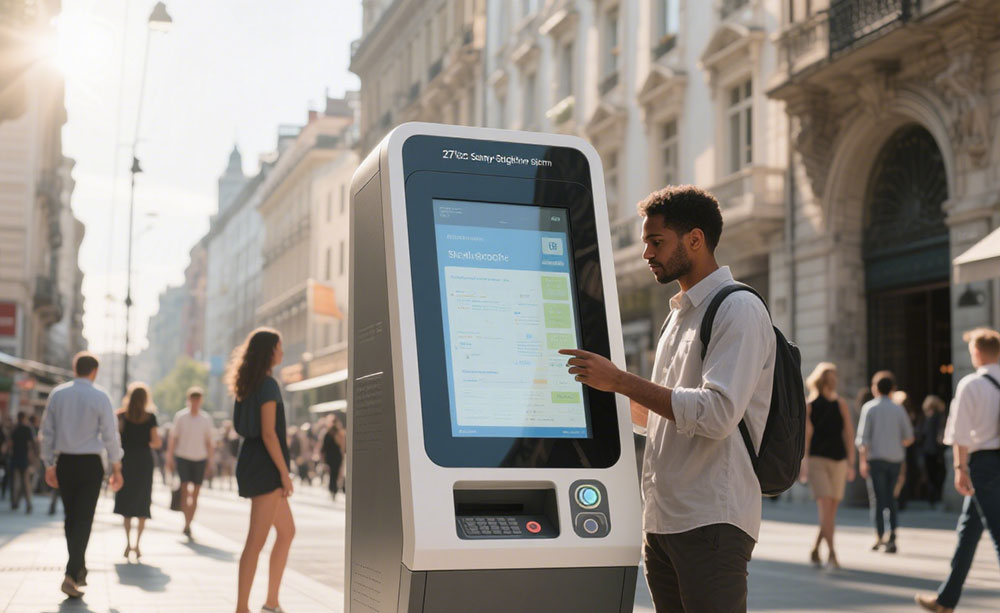
Second, assess ruggedization features such as IP65 or higher ingress protection ratings. These ratings ensure resistance to dust, water jets, and chemical splashes—critical for food processing plants or mining operations. Displays with anti-glare coatings and wide viewing angles (170° horizontal/vertical) improve usability under bright lighting or at oblique angles, common in control rooms.
Third, consider brightness levels. While consumer screens average 250–300 nits, industrial displays should deliver at least 500 nits, with some models reaching 1500 nits for outdoor use. The Samsung SMT5690 series, used in railway signaling systems, offers 1200 nits of brightness and automatic ambient light sensing to optimize visibility.
Fourth, examine long-term reliability. Industrial LCDs undergo rigorous testing per MIL-STD-810G standards for shock, vibration, and thermal cycling. Look for displays with MTBF (Mean Time Between Failures) exceeding 100,000 hours—this is a key metric for mission-critical systems like SCADA or medical imaging equipment.
Finally, verify compatibility with existing control systems. Many industrial LCDs support standard interfaces like LVDS, RGB, or HDMI, and some offer built-in touch functionality with glove-compatible sensors for hazardous environments.
By prioritizing these factors—temperature resilience, environmental sealing, brightness, longevity, and system integration—engineers can future-proof their installations and reduce lifecycle costs. Leading manufacturers like LG Display, BOE Technology, and Sharp Electronics now offer modular industrial LCD solutions tailored to specific sectors such as automotive assembly, energy infrastructure, and logistics automation.