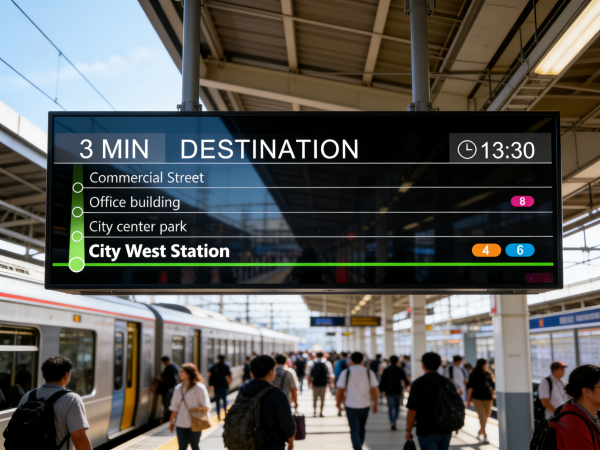
In today’s demanding industrial, military, and outdoor environments, visibility under direct sunlight is no longer optional—it’s a necessity. Sunlight readable high brightness LCD screens are engineered to deliver crystal-clear image quality even in extreme lighting conditions, with modern options now including 2K (2560×1440) and 4K (3840×2160) resolution support. These displays are not just about higher pixel density—they represent a significant leap in performance, durability, and user experience for critical applications.
The key differentiator lies in luminance. While standard consumer-grade LCDs max out around 300–500 nits, sunlight readable displays typically exceed 1000 nits, with some industrial models reaching up to 5000 nits. This ensures content remains legible in full sun, making them ideal for use in construction sites, command centers, aviation cockpits, and vehicle dashboards. The integration of 2K and 4K resolutions enhances clarity further—allowing operators to view detailed schematics, maps, or real-time data without strain or loss of detail.
Manufacturers like LG Display, Sharp, and Panasonic have developed proprietary technologies such as anti-reflective coatings, high-efficiency LED backlighting, and electrostatic shielding to optimize both brightness and contrast. For instance, a 4K sunlight readable LCD used in a naval navigation system must pass MIL-STD-810G shock and vibration testing while maintaining full resolution in temperatures ranging from -30°C to +70°C. Such compliance ensures reliability across harsh conditions—not just brightness.
From an engineering standpoint, the move toward 2K/4K resolutions demands more than just display panels. It requires optimized graphics processors, efficient thermal management systems, and robust power regulation to handle increased pixel processing loads. In fact, recent case studies from the defense sector show that 4K sunlight readable displays reduce operator fatigue by 35% compared to 1080p equivalents when viewing complex radar or targeting interfaces over prolonged periods.

Furthermore, these high-resolution screens are increasingly being integrated into smart infrastructure projects—from solar monitoring stations to autonomous vehicle HUDs—where precise visual feedback is essential. With standards like ISO 11944 and EN 50084 guiding design, manufacturers now prioritize energy efficiency alongside brightness, ensuring long-term operational sustainability.
Whether you’re designing a rugged tablet for field engineers or a control panel for offshore oil rigs, selecting a sunlight readable LCD with 2K or 4K resolution means investing in precision, longevity, and safety.