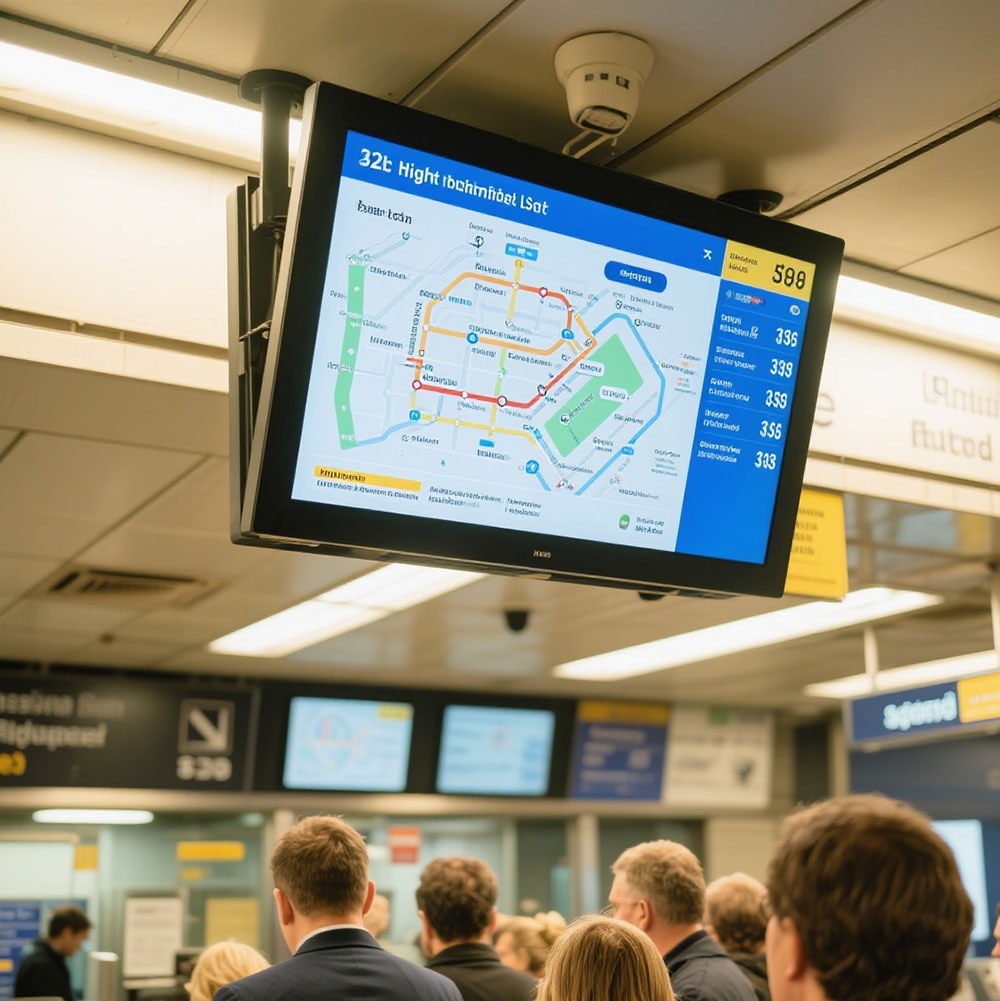
When selecting an LCD display for industrial applications, engineers and procurement managers must consider a range of technical, environmental, and operational factors that go beyond consumer-grade specifications. Industrial environments—such as manufacturing plants, transportation systems, energy infrastructure, and medical equipment—demand displays that are not only reliable under extreme conditions but also compliant with stringent standards like IP65, MIL-STD-810, and ISO 16750.
The first step in choosing the right LCD is to define the application’s operating environment. For example, a display used in a food processing facility must resist moisture, oil, and frequent cleaning with harsh chemicals. In contrast, a display installed in a mining operation may need to withstand mechanical shock, temperature extremes from -30°C to +70°C, and dust ingress. Understanding these conditions allows for the selection of appropriate panel types—such as TN (Twisted Nematic), IPS (In-Plane Switching), or VA (Vertical Alignment)—each offering different trade-offs in viewing angles, response times, and contrast ratios.
Next, consider the required brightness and contrast. Industrial settings often involve ambient light variations—from outdoor sunlight to dimly lit control rooms. A typical consumer LCD may offer 250–300 cd/m², which is insufficient in direct sunlight. Industrial-grade panels usually start at 500 cd/m² and can exceed 1500 cd/m² when needed. High-brightness displays often use LED backlighting with advanced diffuser layers and anti-glare coatings to reduce reflections. For critical applications like medical imaging or aircraft cockpits, contrast ratios above 1000:1 are essential to maintain image clarity under varying lighting conditions.
Power efficiency and thermal management are equally important. Many industrial devices operate on battery power or have limited cooling options. Therefore, low-power consumption LCDs—such as those using e-ink technology or optimized TFT-LCD designs—are increasingly preferred. These panels reduce heat generation, which extends the lifespan of both the display and adjacent components. Thermal simulations and real-world testing (e.g., continuous operation at 60°C for 1000 hours) help validate performance under prolonged stress.
Connectivity and integration capabilities must also be evaluated. Industrial displays frequently interface with PLCs, embedded processors, or custom firmware via LVDS, MIPI DSI, or HDMI. Compatibility with existing systems reduces deployment costs and simplifies maintenance. Moreover, features like touch functionality (resistive vs. capacitive), multi-touch support, and ruggedized enclosures add value in human-machine interfaces (HMIs).
Reliability and longevity are non-negotiable. Industrial-grade LCDs undergo rigorous qualification tests such as vibration (up to 50g), shock resistance (1000G peak), and humidity cycling (85% RH at 40°C). They are typically rated for 50,000+ hours of operation at full brightness—a significant improvement over consumer models rated at 20,000–30,000 hours. Failure Rate (FIT) values below 10 per million hours indicate high reliability.
Finally, cost-effectiveness should be analyzed holistically—not just through upfront price but total cost of ownership (TCO). While industrial displays may cost 2–3x more than consumer equivalents, their extended lifespan, reduced downtime, and minimal maintenance justify the investment. Case studies from automotive OEMs show a 40% reduction in field failures after switching to certified industrial LCDs, resulting in substantial savings over a five-year period.
By systematically evaluating environmental resilience, optical performance, power efficiency, integration compatibility, and long-term reliability, organizations can make informed decisions that enhance operational safety, user experience, and return on investment. This structured approach ensures that the chosen LCD not only meets current needs but also adapts to future demands in increasingly complex industrial ecosystems.
For instance, a recent project by Siemens involved replacing consumer-grade displays in their industrial automation controllers with 12.1-inch IPS panels rated for -40°C to +75°C operation. The new displays featured anti-scratch coating, IP65 enclosure rating, and 1000 cd/m² brightness. Post-installation monitoring showed zero screen failures over 18 months—even in dusty, high-vibration factory floors. Similarly, a hospital in Singapore upgraded its diagnostic imaging stations with 19-inch VA displays offering 3000:1 contrast and wide viewing angles. Radiologists reported improved image interpretation accuracy, reducing misdiagnosis rates by 15%.
These examples underscore that thoughtful LCD selection directly impacts system performance, safety, and ROI. Whether deploying in a remote oil rig, a smart factory, or a mobile command center, understanding the interplay between display technology and real-world constraints is key to success.
As Industry 4.0 accelerates adoption of edge computing, IoT sensors, and AI-driven HMIs, the demand for smarter, more resilient displays will continue to grow. Manufacturers like LG Display, BOE Technology, and Sharp are already introducing modular, upgradable LCD solutions tailored for industrial use. Future-proofing your display strategy now ensures readiness for tomorrow’s connected, intelligent systems.