
How to Choose the Right LCD Display for Industrial Applications
When selecting an LCD display for industrial applications, engineers and procurement teams must consider a wide range of technical, environmental, and operational factors that go far beyond basic screen resolution or size. Industrial environments—ranging from manufacturing floors to outdoor field equipment—pose unique challenges such as extreme temperatures, mechanical shock, dust exposure, and prolonged operational hours. Choosing the wrong display can lead to system failures, downtime, and costly repairs. Therefore, understanding the full scope of requirements is critical.
First, define the application environment. Is the display intended for use in a clean room with stable temperature and humidity, or in a harsh outdoor setting exposed to rain, vibration, and temperature swings? For example, displays used in oil and gas drilling platforms must withstand -40°C to +70°C operating ranges, while those in food processing plants must comply with IP65 or higher ingress protection to resist water and cleaning agents. Understanding the IEC 60529 standard for IP ratings helps ensure the chosen display meets these requirements.
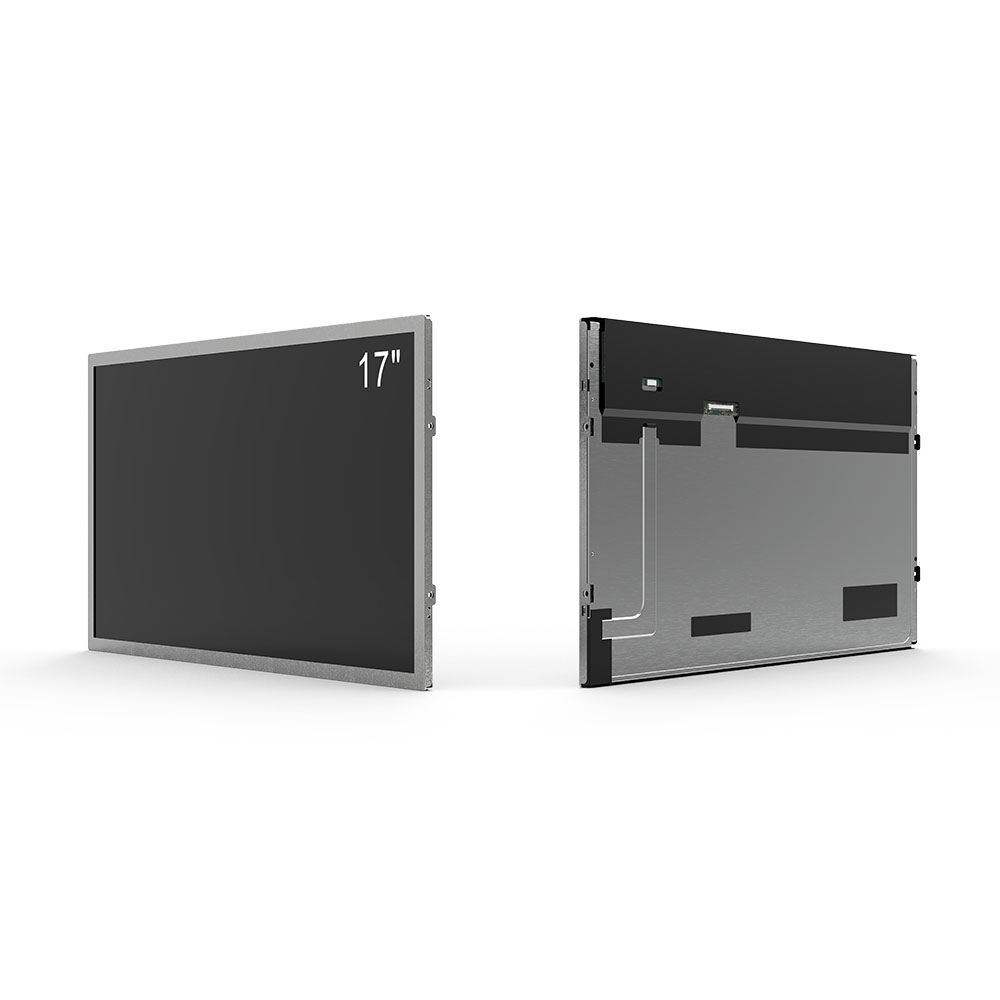
Next, evaluate brightness and contrast ratios. In sunlight-exposed areas like construction sites or solar farms, displays need at least 1500 nits of brightness to remain legible—a standard often found in ruggedized industrial LCDs. Standard office monitors typically offer only 300–400 nits. Contrast ratio also matters; high contrast (e.g., 1000:1 or better) improves readability in dim lighting conditions, such as inside a warehouse at night or in underground mining operations. The ANSI/IES RP-10-2019 standard for luminance measurements provides a reliable benchmark for evaluating real-world performance.
Display type matters significantly. TN (Twisted Nematic), IPS (In-Plane Switching), and VA (Vertical Alignment) panels each have trade-offs. IPS panels are preferred in industrial settings due to their superior viewing angles (up to 178°), color accuracy, and consistent performance under stress. TN panels may be cheaper but suffer from narrow viewing angles and slower response times—unsuitable for dynamic data visualization. VA panels offer deep blacks but may lag in motion clarity. Always match panel technology to your specific use case: static monitoring vs. real-time control interfaces.
Backlight technology is another key factor. LED-backlit displays are now the industry standard, offering energy efficiency, longer lifespan (>50,000 hours), and uniform illumination compared to older CCFL systems. For safety-critical applications like medical devices or aircraft dashboards, cold cathode fluorescent lamps (CCFLs) may still be used due to legacy compatibility—but they are increasingly phased out. Consider LED types: full-array local dimming (FALD) enhances contrast in premium models, while edge-lit LEDs reduce thickness and cost.
Connectivity options must align with existing infrastructure. Industrial displays often require RS-232, RS-485, CANbus, or Ethernet interfaces for integration with PLCs (Programmable Logic Controllers), SCADA systems, or HMIs (Human-Machine Interfaces). USB-C PD (Power Delivery) is becoming common for both power and data transfer in portable devices. Ensure the display supports the required protocols—some vendors provide custom firmware or SDKs for integration ease.
Durability is non-negotiable. Ruggedized displays should meet MIL-STD-810G for shock and vibration resistance, and IK08 or higher for impact protection. Glass surfaces must be tempered or Gorilla Glass-certified to prevent damage from accidental impacts. Mechanical locking mechanisms (e.g., Kensington-style locks) add physical security in public-facing installations like kiosks or retail terminals.
Environmental certifications matter too. CE, FCC, RoHS, and UL approvals confirm compliance with regional safety and electromagnetic interference standards. For global deployments, ISO 14001 and ISO 9001 certifications indicate sustainable and quality-controlled manufacturing processes. These credentials are essential for audits, warranty claims, and regulatory compliance in regulated industries like pharmaceuticals or aerospace.
Cost-effectiveness isn’t just about upfront price—it’s about total cost of ownership (TCO). A $300 industrial display that lasts 10 years with minimal maintenance will outperform a $150 consumer-grade unit that fails after two years. Calculate TCO using metrics like Mean Time Between Failures (MTBF), which for reputable industrial LCDs is typically >100,000 hours. Also, factor in software support, driver availability, and spare part accessibility.
User interface design is often overlooked. Touchscreens should be multi-touch capable with glove-friendly sensors if used in cold climates or hazardous environments. Capacitive touch may fail with gloves on, so resistive touch or infrared-based solutions are better suited for such cases. For voice-assisted interfaces, ensure the display includes built-in microphones and noise-canceling algorithms to function effectively in noisy factories.
Testing and validation should not be skipped. Before deployment, conduct accelerated life testing (ALT), thermal cycling, humidity exposure, and EMI immunity tests per IEC 61000-4 series standards. Use tools like oscilloscopes and spectrometers to verify signal integrity and image quality under worst-case scenarios. Pilot deployments in similar environments help identify potential issues early.
Finally, choose suppliers with proven track records. Look for manufacturers who provide comprehensive documentation—including datasheets, mounting guides, and troubleshooting manuals—and offer responsive technical support. Companies like LG Display, Sharp, and BOE Technology lead the market with industrial-grade panels backed by robust R&D and global service networks.
In summary, choosing the right LCD for industrial applications requires balancing technical specifications, environmental resilience, connectivity needs, and long-term value. By following this structured approach, businesses can avoid costly mistakes and ensure reliable performance across diverse industrial settings.
上一篇:Outdoor Digital Signage Solutions for Effective Public Communication
下一篇:Strip Screen Series Display Sizes and Applications in Modern Electronics