
Understanding LCD Technology in Modern Displays
In today’s digital age, Liquid Crystal Display (LCD) technology remains one of the most widely used display solutions across consumer electronics, industrial equipment, and professional visualization systems. From smartphones and televisions to medical monitors and automotive dashboards, LCDs provide a cost-effective, energy-efficient, and high-resolution method for visual information presentation. This article explores the fundamental principles of LCD technology, its evolution over recent decades, current applications, key performance metrics, manufacturing innovations, and future trends that continue to drive industry adoption.
At its core, an LCD operates by manipulating the alignment of liquid crystal molecules using electric fields. These crystals, which exhibit properties between those of conventional liquids and solid crystals, do not emit light themselves—instead, they modulate light passing through them. A backlight system, typically LED-based in modern devices, provides the necessary illumination. Polarizing filters and color filters then shape this light into visible images. Each pixel on an LCD screen consists of sub-pixels (red, green, and blue), allowing for precise control over brightness, contrast, and color reproduction. This passive matrix or active matrix design (especially TFT-LCD, or Thin-Film Transistor Liquid Crystal Display) enables high-speed response times and accurate grayscale representation critical for dynamic content such as video playback.
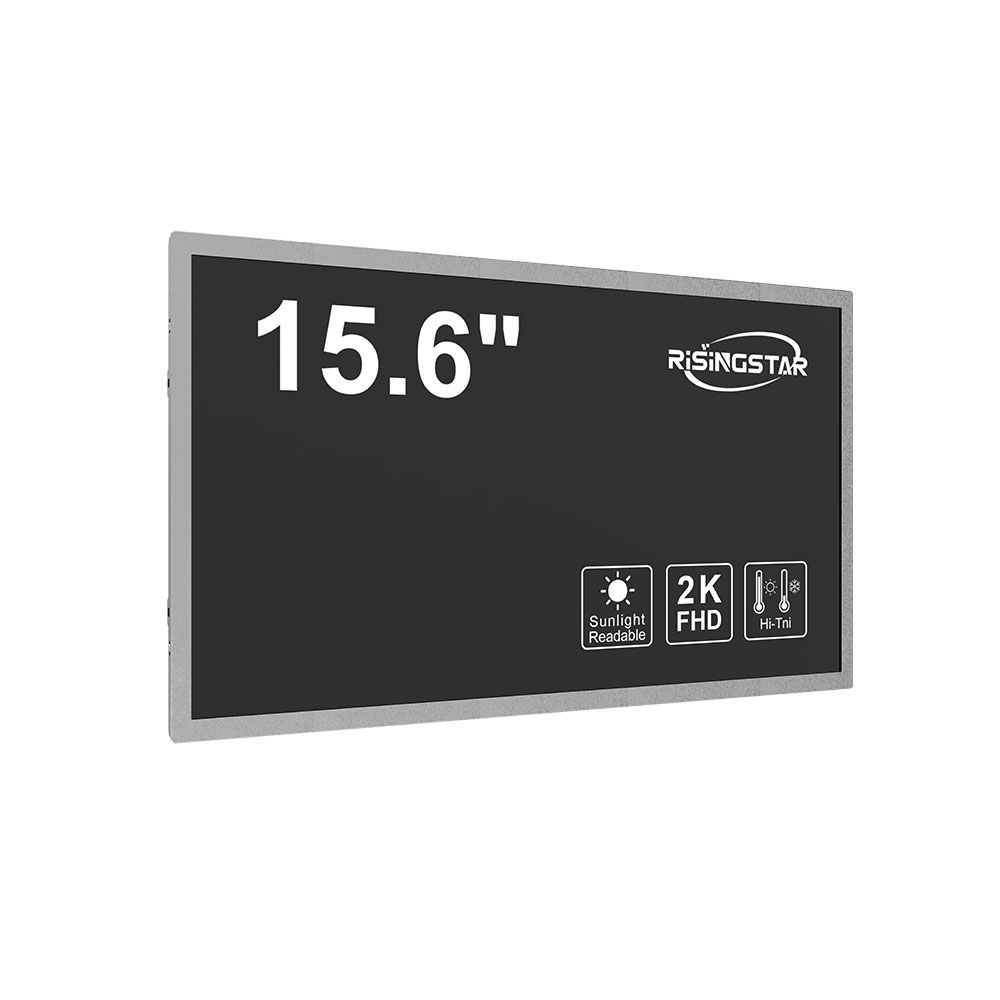
The journey of LCD technology began in the 1960s with early research at RCA Laboratories, but it wasn’t until the late 1980s and early 1990s that commercial viability improved significantly. The development of Twisted Nematic (TN) and later In-Plane Switching (IPS) modes revolutionized display quality, reducing viewing angle limitations and enhancing color accuracy. By the mid-2000s, LCDs had largely replaced Cathode Ray Tube (CRT) displays in consumer markets due to their compact size, lower power consumption, and superior scalability. Today, advanced technologies like OLED (Organic Light-Emitting Diodes) and MicroLED are emerging, yet LCDs remain dominant in price-sensitive and large-screen segments due to mature production processes and economies of scale.

One of the primary advantages of LCD technology is its versatility. It supports various resolutions—from HD (720p) to 4K UHD and even 8K for specialized applications—and can be manufactured in flexible form factors, enabling curved screens and rollable displays. Additionally, advancements in backlighting techniques such as local dimming, edge-lit LED arrays, and mini-LED backlights have improved contrast ratios and reduced power consumption. For example, LG Display’s α-Mini LED technology integrates thousands of tiny LEDs behind the panel, offering localized brightness control that rivals OLED while maintaining longer lifespan and better outdoor visibility.
Manufacturing efficiency plays a crucial role in the continued dominance of LCDs. Companies like Samsung Display, BOE Technology, and AU Optronics operate massive fabs capable of producing billions of panels annually. The process involves several stages: substrate cleaning, thin-film transistor (TFT) fabrication, liquid crystal injection, color filter application, polarizer attachment, and final testing. Quality control is stringent, with automated optical inspection systems ensuring defect-free production. Moreover, environmental considerations such as water usage, chemical disposal, and carbon footprint reduction are now integrated into manufacturing standards, aligning with global sustainability goals like the UN SDGs.
In terms of real-world applications, LCDs power more than just entertainment devices. Medical imaging systems rely on high-precision LCDs for diagnostic clarity in ultrasound, MRI, and X-ray machines. Industrial automation uses ruggedized LCD panels for control interfaces in harsh environments—these often feature wide temperature ranges (-30°C to +70°C), anti-glare coatings, and IP65/IP67 ratings for dust and water resistance. Automotive manufacturers increasingly adopt LCDs for instrument clusters and infotainment systems, leveraging features like adaptive brightness and touch sensitivity for enhanced driver experience.
Performance metrics such as response time, refresh rate, color gamut, and luminance are essential for evaluating LCD quality. For instance, gaming monitors require response times under 1ms to prevent motion blur—a feat achieved through Overdrive technology that accelerates pixel transitions. Meanwhile, professional graphic designers demand wide color coverage (e.g., DCI-P3 or Adobe RGB) and accurate white balance calibration. Industry benchmarks like VESA DisplayHDR certification ensure consistency in HDR (High Dynamic Range) performance across different brands and models.
Despite challenges like limited contrast compared to OLED and slower response times in older TN panels, ongoing R&D addresses these gaps. Newer LCD variants such as IPS-Pro, VA (Vertical Alignment), and QD-LCD (Quantum Dot-enhanced LCD) improve both visual fidelity and energy efficiency. Quantum dots enhance color purity by converting blue light from LEDs into pure red and green wavelengths, resulting in brighter, more vibrant images without increasing power draw. Studies by the Society for Information Display (SID) show that QD-LCDs achieve up to 140% NTSC color gamut, outperforming standard LCDs by nearly 40%.
Looking ahead, the integration of AI-driven optimization in display drivers and firmware promises smarter power management and personalized user experiences. For example, machine learning algorithms can dynamically adjust brightness based on ambient lighting conditions and content type—reducing energy use during static scenes while boosting performance during fast-moving videos. Furthermore, transparent and foldable LCD prototypes developed by companies like TCL and Sharp hint at next-generation applications in augmented reality (AR), smart glasses, and modular home appliances.
In conclusion, LCD technology continues to evolve rapidly, driven by consumer demand for better visuals, environmental responsibility, and industrial innovation. Its adaptability, cost-effectiveness, and scalability make it indispensable across multiple sectors—even as newer technologies emerge. Whether you’re a casual user, a professional designer, or an engineer designing embedded systems, understanding LCD fundamentals empowers smarter decision-making when selecting displays for your project or product. As the global display market grows—with projections exceeding $120 billion by 2026 according to Statista—the importance of mastering LCD technology cannot be overstated.
上一篇:RisingStar Screens in Industrial Applications High Performance and Longevity Unmatched
下一篇:How to Choose the Right LCD Display for Industrial Applications