
Common LCD Display Ratios and Sizes for Modern Applications
In today's digital era, liquid crystal displays (LCDs) are ubiquitous across consumer electronics, industrial equipment, medical devices, and commercial signage. Among the most widely adopted display formats is the 16:9 aspect ratio—a standard that has become the default for modern screens due to its compatibility with high-definition (HD), full HD (FHD), and ultra-high-definition (UHD) video content. This widescreen format perfectly balances screen real estate and visual immersion, making it ideal for both personal and professional use.
LCD sizes range from compact 10.1-inch units used in portable tablets and handheld devices to massive 110-inch displays for digital signage in retail environments or corporate boardrooms. For example, a 13.3-inch LCD is commonly found in ultrabooks and convertible laptops, while 15.6-inch displays dominate the laptop market for their optimal balance of portability and usability. Larger screens such as 21.5-inch and 23.8-inch panels are popular in desktop monitors for productivity tasks like graphic design, coding, and data analysis—especially when paired with 16:9 resolution support (e.g., 1920×1080 or 2560×1440).
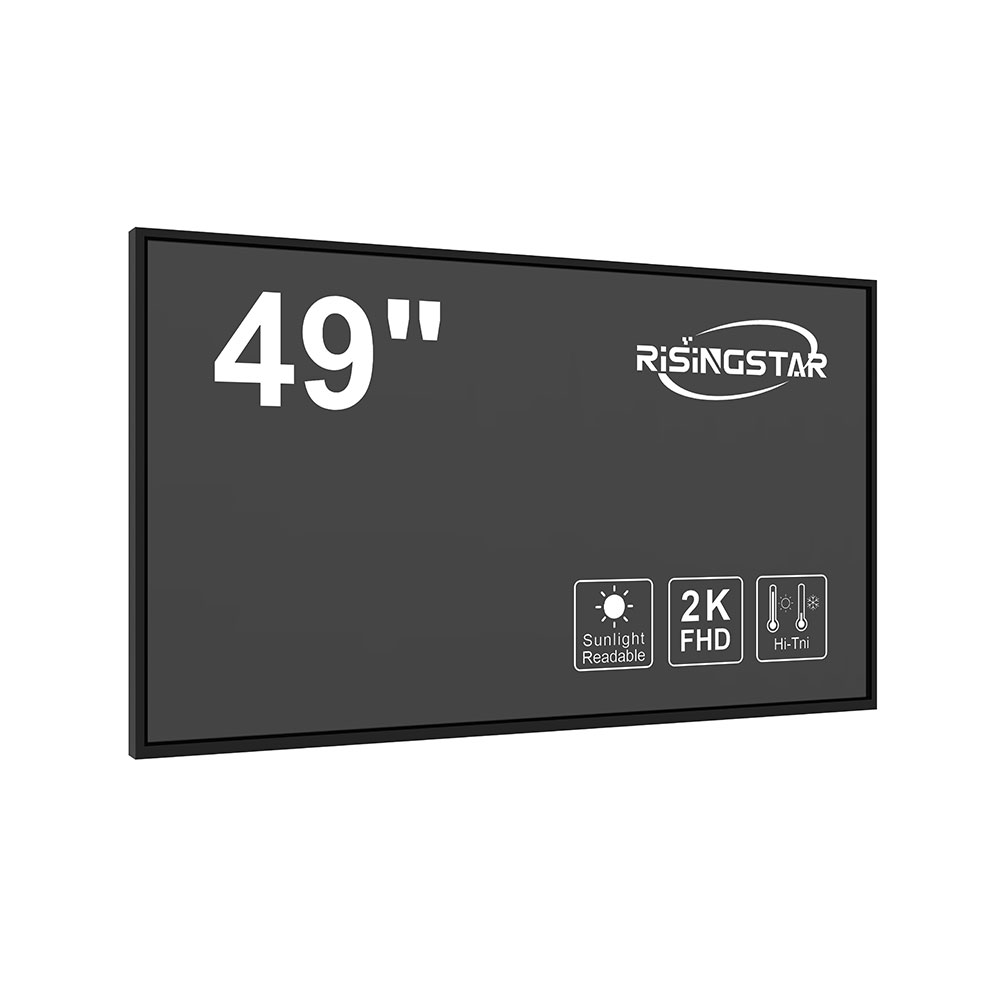
In commercial and public spaces, 27-inch to 55-inch displays are prevalent in digital signage, kiosks, and interactive touchscreens. The 43-inch and 49-inch variants are increasingly used in conference rooms and educational institutions for collaborative work, while 65-inch and larger panels serve as centerpieces in home theaters and large-scale advertising. Notably, 75-inch and 86-inch displays are often deployed in enterprise settings like control rooms, where real-time data visualization and multi-window layouts demand high clarity and scalability.
The 16:9 ratio ensures consistent image scaling without black bars on most streaming platforms and operating systems, reducing user frustration and enhancing media consumption experiences. Furthermore, many manufacturers now offer IPS (In-Plane Switching) technology in these sizes for wider viewing angles and better color accuracy—critical for applications in healthcare, aviation, and automotive dashboards.
Environmental durability also matters. Industrial-grade LCDs in these sizes undergo rigorous testing per IEC 60068 standards for temperature, humidity, and vibration resistance. For instance, a 43-inch outdoor-rated LCD might be used in a traffic management system, while a 32-inch indoor monitor may be part of a smart factory’s HMI (Human-Machine Interface).
As LED backlighting improves and energy efficiency increases, even larger 98-inch and 110-inch displays are becoming more viable for commercial installations—offering high brightness levels (>500 cd/m²) and long operational lifespans (typically 50,000+ hours). Whether you're selecting a display for gaming, business, education, or industrial automation, understanding the relationship between size, aspect ratio, and application context remains essential for maximizing value and performance.