In today’s rapidly evolving industrial landscape, selecting the appropriate LCD display is no longer a simple task—it requires a strategic approach that balances performance, durability, environmental resilience, and cost-effectiveness. Whether you're designing control panels for manufacturing equipment, building ruggedized IoT devices for logistics, or deploying digital signage in harsh outdoor environments, your choice of LCD technology directly impacts system reliability, user experience, and long-term operational efficiency.
The global industrial LCD market is projected to exceed $20 billion by 2027, according to MarketsandMarkets, driven by increased automation, Industry 4.0 adoption, and the need for real-time data visualization across sectors like energy, automotive, and healthcare. However, not all LCDs are created equal. A consumer-grade display may fail within weeks under continuous operation in a high-temperature factory setting, while an industrial-grade panel with wide temperature tolerance and anti-glare coating can endure years of uninterrupted use.
This article provides a comprehensive guide to choosing the right LCD display for industrial applications. We’ll explore key selection criteria such as brightness, contrast ratio, viewing angles, operating temperature range, mechanical robustness, and environmental certifications (e.g., IP65, MIL-STD-810G). Additionally, we'll highlight real-world case studies from industries such as oil & gas, medical diagnostics, and transportation, where improper LCD selection led to costly downtime or safety issues. Finally, we’ll introduce leading manufacturers—including LG Display, Innolux, AU Optronics, and Sharp—and their most reliable industrial-grade models currently available on the market.
Brightness and Contrast Ratio: The Foundation of Visibility
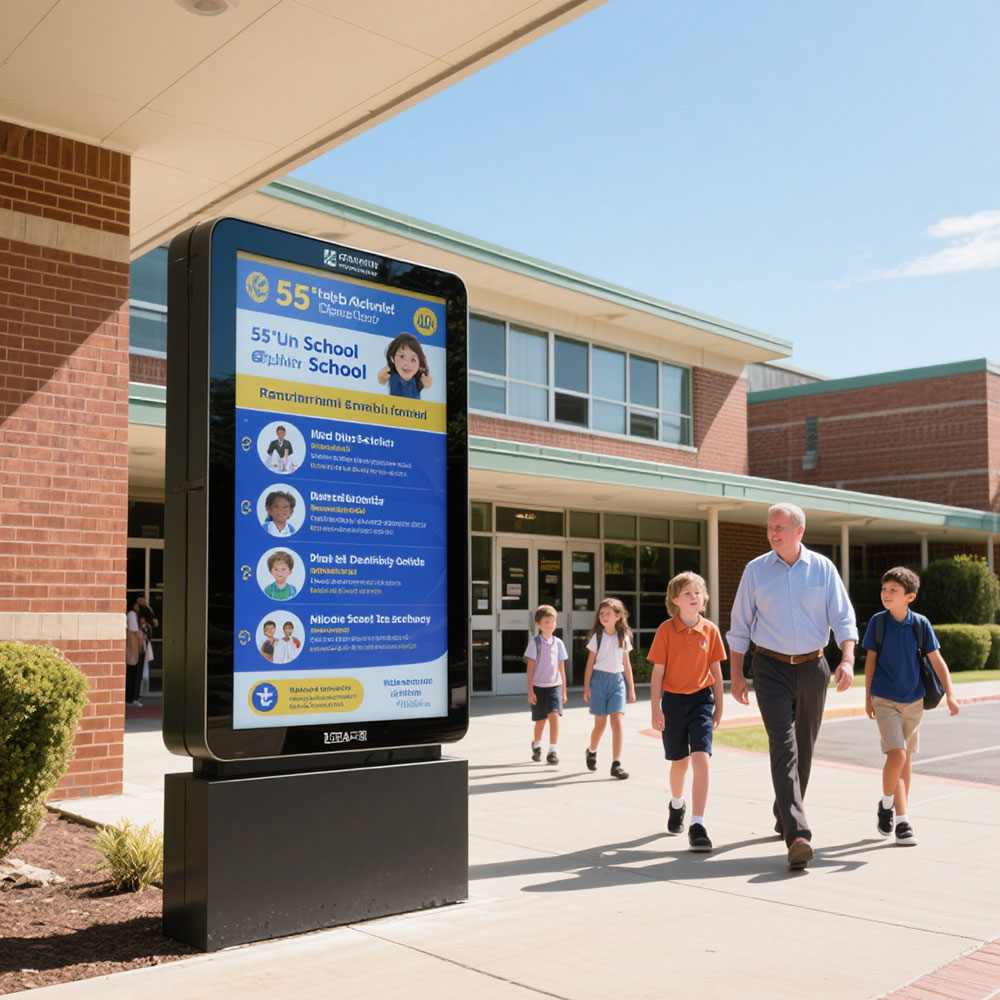
One of the most critical yet often overlooked factors in industrial LCD selection is luminance. While consumer displays typically offer 250–350 nits, industrial environments demand at least 1000 nits—especially in outdoor or brightly lit indoor settings. For example, a solar-powered monitoring station in a desert environment must remain readable under direct sunlight (which can reach over 10,000 lux), making 1500+ nits essential. According to ISO 9241-3 standards, visibility in bright ambient light requires minimum brightness levels that correlate with environmental lighting conditions.
Contrast ratio also plays a vital role. A high contrast ratio (typically >1000:1) ensures sharp text and clear image differentiation even under varying illumination. In medical imaging systems, for instance, poor contrast can lead to misdiagnosis. Similarly, in machine vision applications, low contrast ratios may cause false positives during automated inspection processes. When evaluating LCDs, always request manufacturer datasheets specifying both static and dynamic contrast ratios—not just peak brightness figures.
Viewing Angles and Color Accuracy
Industrial users frequently operate from multiple angles—whether engineers inspecting a control interface from different positions or operators standing beside machinery. Therefore, TN (Twisted Nematic) panels, which suffer from narrow viewing angles and color shift, are generally unsuitable. IPS (In-Plane Switching) and VA (Vertical Alignment) technologies offer wider viewing angles (up to 178° horizontally and vertically) and better color consistency across perspectives.
Color accuracy matters too. In process control systems involving chemical analysis or pharmaceutical production, inaccurate RGB representation can result in flawed decisions. Look for panels with ΔE< 2 (Delta E), indicating minimal deviation from standard color values. Some advanced industrial LCDs now support sRGB, Adobe RGB, or even DCI-P3 color spaces to meet specialized application needs.
Operating Temperature Range: Beyond Standard Specs
While consumer LCDs usually function between 0°C and 50°C, industrial-grade displays must withstand extreme temperatures—from -40°C in Arctic oil rigs to +70°C in steel mills. Thermal stability is governed by the LCD’s backlight type (LED vs. CCFL), liquid crystal formulation, and protective glass coatings.
For example, LED-backlit LCDs perform better than CCFL in cold environments due to faster warm-up times and lower power consumption. Additionally, some manufacturers integrate thermal management systems such as heat sinks or Peltier coolers to maintain optimal internal temperatures. Always verify the specified operating temperature range in the datasheet—not just the storage range—and ensure it aligns with your deployment environment.
Mechanical Durability and Shock Resistance
Vibration, impact, and frequent handling are common in industrial settings. A typical industrial LCD must pass IEC 60068-2-6 (vibration testing) and IEC 60068-2-27 (shock testing). Panels with reinforced frames, tempered glass (often Gorilla Glass or equivalent), and flexible connectors reduce failure risks.
Case Study: A major railway operator in Germany replaced older LCD screens in train control cabins with MIL-STD-810G-certified displays after experiencing repeated screen failures caused by track-induced vibrations. Post-upgrade, maintenance costs dropped by 60%, and operator satisfaction improved significantly.
Environmental Protection Ratings (IPX, IK)
Water ingress and dust accumulation pose serious threats to electronics. Industrial LCDs should ideally have an IP65 rating (dust-tight and protected against water jets) or higher (IP67/IP68). This is especially important in food processing plants, wastewater treatment facilities, and marine applications.
IK ratings measure mechanical impact resistance (e.g., IK08 = 5J impact resistance). Combining IP and IK ratings ensures your display survives both physical and environmental stressors. Always test prototypes in simulated field conditions before full-scale deployment.
Connectivity and Integration Options
Modern industrial LCDs support various interfaces: LVDS, eDP, HDMI, DisplayPort, USB-C, and even Ethernet-based protocols like Gigabit Video over IP (GVoIP). For edge computing applications, embedded processors (like those from NXP or Intel) integrated into the display module can reduce system complexity.
Some vendors also provide SDKs (Software Development Kits) for custom firmware development, enabling features like touch calibration, automatic brightness adjustment based on ambient light sensors, or remote diagnostics via cloud platforms.
Cost Considerations and Lifecycle Management
High-quality industrial LCDs cost 2–5x more than consumer counterparts—but they offer superior return on investment through reduced downtime and extended lifespan. For example, a $300 industrial display lasting 10 years will cost less per year than a $100 consumer model failing every 18 months.
Additionally, consider total cost of ownership (TCO): including installation, maintenance, spare parts availability, and software updates. Leading suppliers like LG Display and Innolux provide multi-year warranty programs and lifecycle support, ensuring replacement parts remain available beyond standard product lifespans.
Emerging Trends: OLED, MicroLED, and AI-Enhanced Displays
While traditional LCDs dominate the industrial sector, newer technologies like OLED and MicroLED are gaining traction. OLED offers deeper blacks, faster response times, and flexible form factors—ideal for wearable HMI devices. MicroLED promises higher brightness (>5000 nits), longer life, and better energy efficiency, though current costs limit widespread adoption.
AI-enhanced displays are another frontier. Some industrial LCDs now incorporate onboard neural networks for adaptive contrast optimization, predictive failure detection, and anomaly recognition in visual data streams—a game-changer for smart factories.
To summarize, choosing the right industrial LCD involves more than just comparing specs—it requires understanding your specific use case, validating environmental compatibility, and partnering with trusted suppliers who offer technical support and long-term serviceability. By following this structured evaluation framework, engineers and procurement managers can make informed decisions that enhance productivity, safety, and ROI in demanding industrial environments.