In today’s increasingly connected world, high-brightness LCD screens are critical for applications in outdoor and industrial environments—from military displays to construction equipment, medical devices, and transportation systems. A key challenge remains achieving consistent visibility under direct sunlight while maintaining energy efficiency and long-term reliability.
The foundation of a sunlight-readable LCD lies in its luminance output. Industry standards such as MIL-STD-3009 and ISO 13406-2 recommend minimum brightness levels of 1,500 cd/m² for outdoor use, with premium designs targeting 3,000–5,000 cd/m². These values ensure the screen remains legible even under peak solar irradiance (over 100,000 lux). However, simply increasing brightness isn’t enough—designers must also optimize contrast ratio, anti-glare coatings, and ambient light sensors.
Modern solutions integrate passive and active technologies. Passive methods include using high-transmittance polarizers, reflective backlights, and anti-reflective (AR) coatings that reduce surface reflection by up to 90%. Active approaches involve adaptive brightness control powered by photodiodes or ambient light sensors, which dynamically adjust screen output based on environmental conditions—saving power without sacrificing readability.
For extreme environments like desert operations or Arctic deployments, thermal management becomes critical. High-brightness LEDs generate more heat, so thermal dissipation strategies—such as integrated heat pipes or thermally conductive substrates—are essential. Additionally, ruggedized housings with IP67/IP68 ratings protect against dust, moisture, and shock, ensuring durability beyond standard industrial specifications.
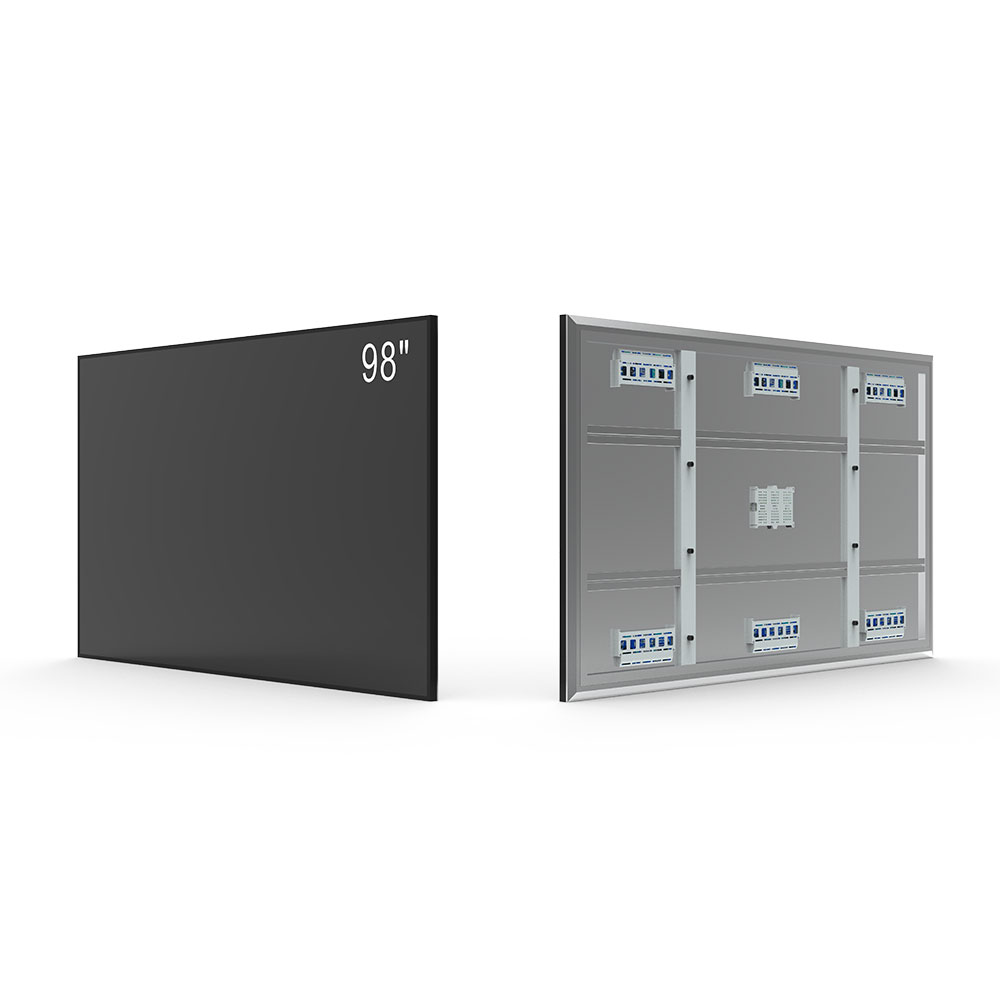
Case studies from leading manufacturers like Sharp, LG Display, and CMO Display demonstrate real-world performance gains. For example, a recent deployment in a mining truck dashboard used a 4,000 cd/m² display with an AR coating and adaptive brightness—resulting in a 40% reduction in battery drain compared to fixed-brightness alternatives. Such innovations prove that combining optical engineering, smart power management, and robust materials yields optimal results.
In conclusion, designing a sunlight-readable high-brightness LCD requires a multidisciplinary approach—balancing luminance, contrast, thermal stability, and user experience. As demand grows in EVs, drones, and defense tech, engineers must stay ahead of evolving standards and leverage proven materials science and system-level integration to deliver reliable, readable displays under any condition.