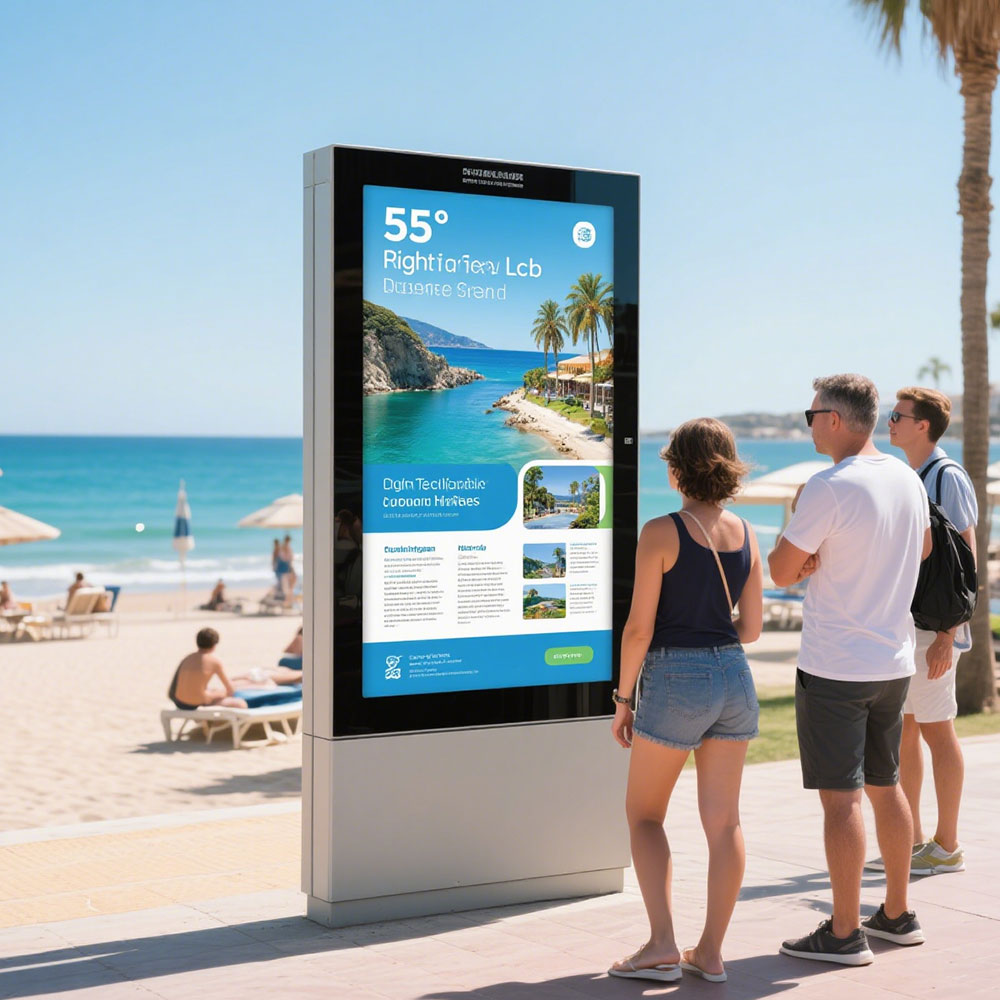
When designing outdoor electronic systems—such as industrial control panels, transportation displays, or public information kiosks—the choice of a high-brightness LCD screen is critical. A sunlight-readable display must maintain visibility under direct sunlight, often exceeding 5000 nits of peak brightness. Unlike indoor screens that operate in controlled lighting, outdoor environments demand robust optical performance and thermal resilience.
The first step is to understand the difference between luminance (measured in nits) and contrast ratio. For true sunlight readability, a minimum of 3,000 nits is recommended, but industry standards like MIL-STD-188-134B for military-grade equipment often require 5,000–10,000 nits. Manufacturers use advanced technologies such as high-efficiency LED backlighting, anti-glare coatings, and polarization filters to achieve this. For example, Sharp’s “Sunlight Readable” displays utilize a proprietary reflective layer that reduces ambient light interference while maintaining image clarity even at noon.
Another key factor is the screen’s viewing angle. Many outdoor displays use IPS (In-Plane Switching) panels for wide-angle visibility, which is essential for public-facing applications. However, IPS panels typically consume more power than TN (Twisted Nematic) types. To balance brightness and efficiency, some manufacturers integrate dynamic brightness adjustment algorithms that lower power consumption during low-light conditions without sacrificing daytime visibility.

Environmental durability also matters. Look for screens rated IP65 or higher for dust and water resistance, especially in humid or rainy climates. Thermal management is equally important—high-brightness LEDs generate significant heat. Effective heat dissipation through aluminum frames or active cooling systems ensures long-term reliability.
Case studies from the automotive and aviation industries show that integrating sunlight-readable LCDs with smart dimming technology not only improves visibility but also extends battery life in mobile units. For instance, Garmin’s aviation displays use real-time ambient light sensors to dynamically adjust brightness, reducing energy use by up to 40% while maintaining compliance with FAA regulations.
Finally, consider certifications such as CE, RoHS, and ISO 14001 for environmental compliance. These ensure your chosen display meets international safety and sustainability benchmarks. By prioritizing brightness, contrast, viewing angles, ruggedness, and smart features, engineers can select the optimal sunlight-readable LCD for any demanding outdoor application.