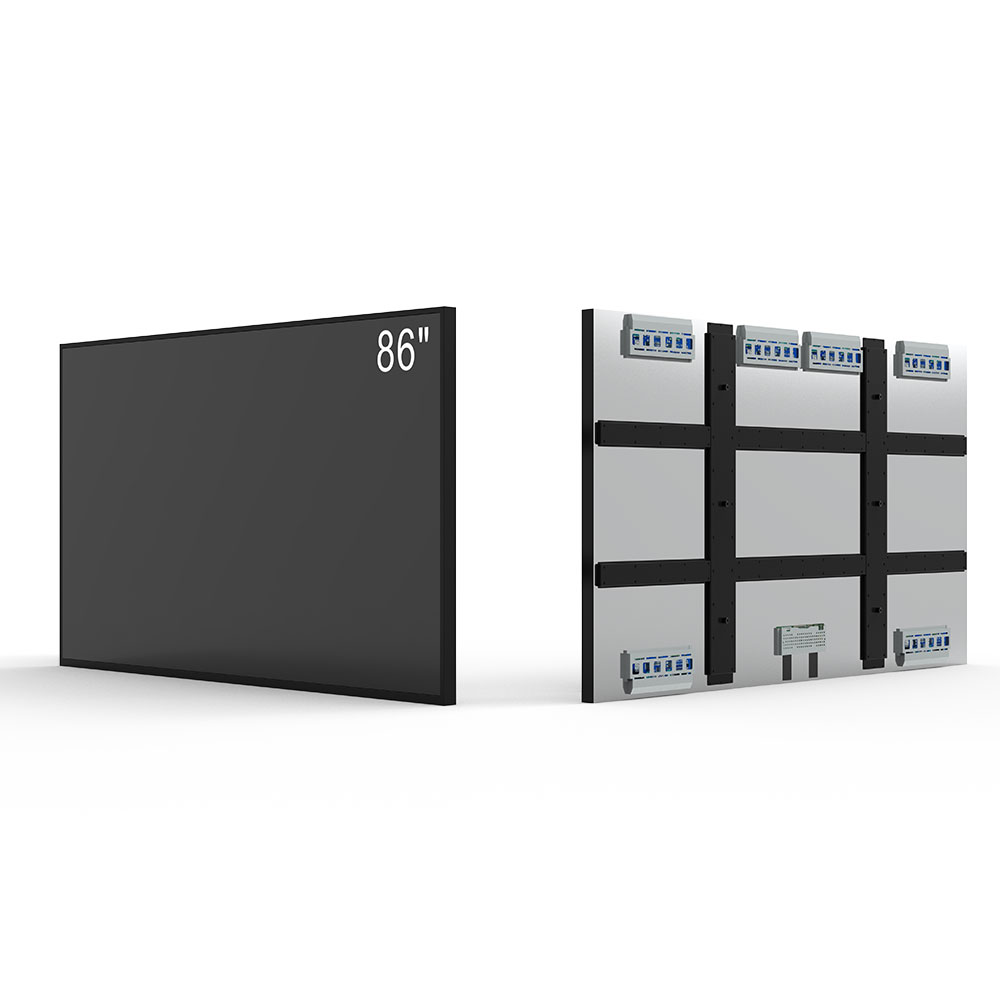
LCD Monitor Display Ratios Explained 16:9 for Professional and Consumer Use
In today’s digital landscape, the 16:9 aspect ratio remains the dominant standard for LCD monitors across a wide range of applications—from consumer electronics to professional displays. This widescreen format, which maintains a horizontal-to-vertical pixel ratio of 16 units wide by 9 units tall, offers optimal compatibility with modern content like HD video, 4K streaming, and productivity software such as Microsoft Office or Adobe Creative Suite.
The 16:9 display ratio is particularly well-suited for monitors in sizes ranging from 10.1 inches (common in portable tablets and compact laptops) up to massive 110-inch panels used in commercial signage, control rooms, and large-scale presentations. For example, a 27-inch 16:9 monitor delivers a resolution of 1920x1080 (Full HD), while a 55-inch model can support 3840x2160 (4K UHD). These resolutions ensure sharp image quality and ample screen real estate for multitasking environments—whether you’re editing videos, coding, or managing spreadsheets.
Industry data from the International Data Corporation (IDC) shows that over 85% of all new LCD monitors shipped globally in 2023 adopted the 16:9 format due to its versatility in gaming, office work, and media consumption. Larger models such as 43-inch, 49-inch, and 65-inch screens are increasingly popular in retail, education, and healthcare settings where immersive visuals and high brightness levels are essential.

Manufacturers like LG, Dell, Samsung, and BenQ have standardized on 16:9 for their mid- to high-end product lines, integrating features such as IPS panels, HDR support, and USB-C connectivity. Meanwhile, specialized sectors like industrial automation and medical imaging use custom 16:9 panels with enhanced durability, wide viewing angles, and anti-glare coatings to meet ISO 13485 and IEC 60601 standards.
When selecting an LCD monitor, consider both size and resolution: smaller 10.1” to 15.6” displays excel in portability and space efficiency, while larger 21.5” to 110” models provide superior immersion for home theaters or command centers. Regardless of size, the consistent 16:9 aspect ratio ensures seamless compatibility with operating systems, streaming platforms, and productivity tools.